:::
MTC
- A-Font-Size:Small
- AFont-Size:Middle
- A+Font-Size:Large
MTC Introduction
Talent Development Objectives & Strategy
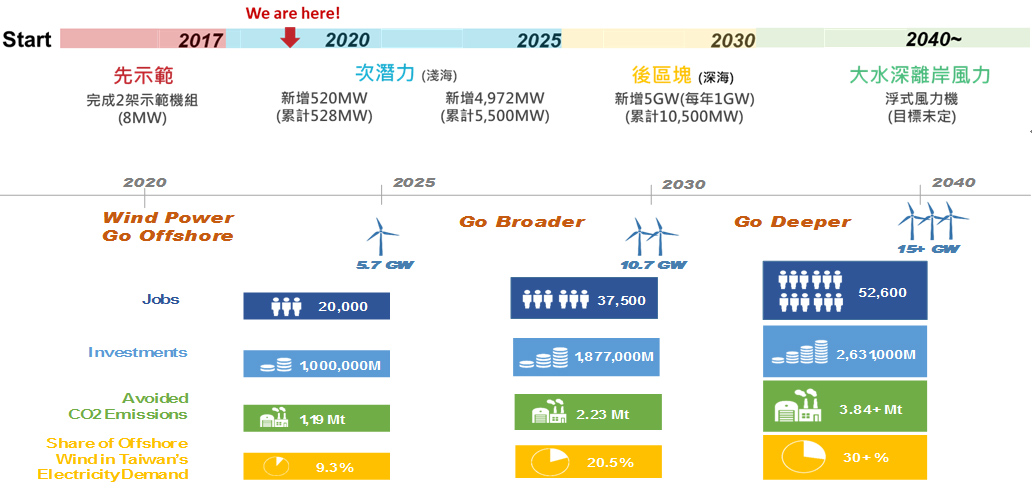
To support Taiwan’s offshore wind development policies, including the Offshore Wind Power Four-Year Promotion Plan and the three-phase development approach of “Demonstration, Potential, and Zonal Development,” the Maritime Technology Innovation Center (MTIC) is committed to building a comprehensive offshore wind talent development platform.
The Center serves as a key enabler of Taiwan’s energy transition while strengthening local workforce capacity and industry competitiveness.
MTIC adopts a phased talent development strategy:
Short-term:
Deliver industry-ready training by providing essential international certification courses such as GWO and OPITO to address immediate workforce demands.
Mid-term:
Develop diversified and advanced training modules aligned with the offshore wind value chain, including customized technical and equipment training in collaboration with industry partners, and gradually introduce additional international certification systems (e.g. NI, IMCA).
Long-term:
Establish MTIC as an internationally aligned offshore wind training hub in the Asia-Pacific region, supporting future workforce needs for zonal development and floating offshore wind projects through international collaboration, standardized curricula, and professional training infrastructure.
Training Services
MTIC’s training framework is structured around four core pillars:
1. International Standard Training
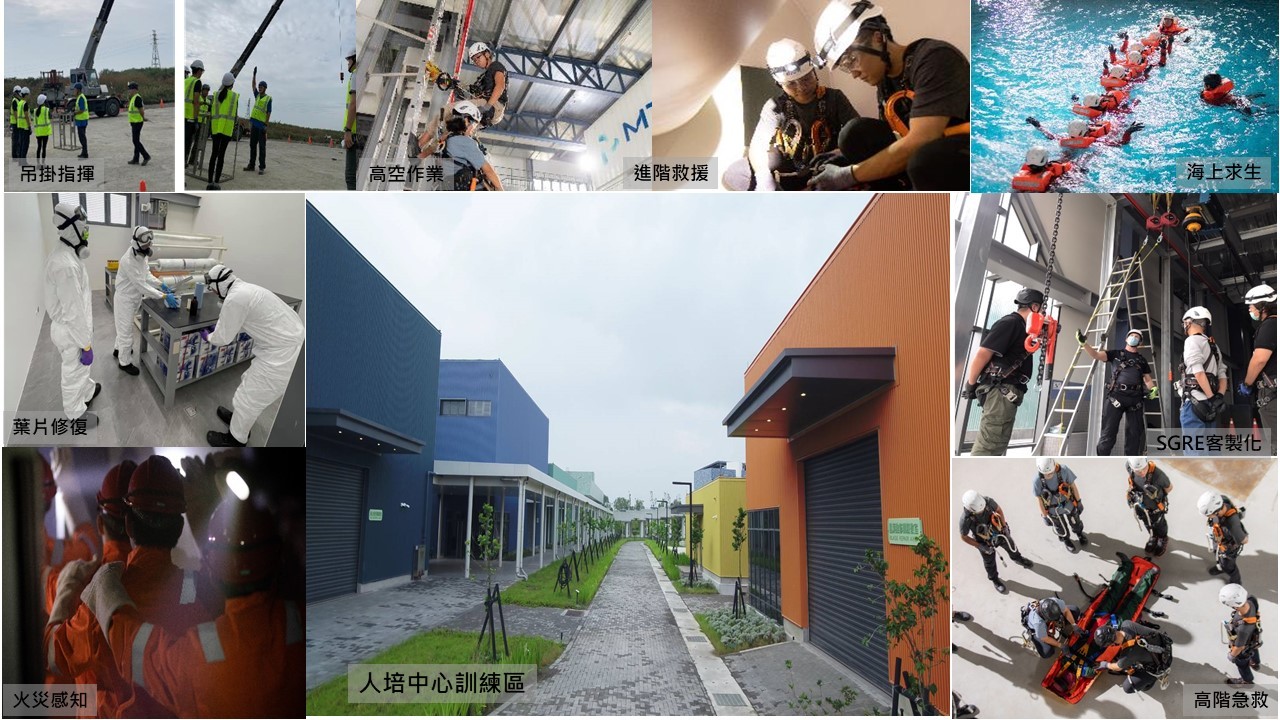
Provision of internationally recognized certification courses, including GWO, OPITO and NI, establishing essential safety and operational competencies for offshore wind professionals.
2. Maritime & Offshore Engineering Training
Professional training utilizing DP simulators, ROV simulators and offshore lifting systems, aligned with international maritime and offshore engineering standards such as NI, IMCA and DNV.
3. Customized & Practical Training
Tailor-made training programs developed in collaboration with OEMs and O&M partners, covering wind turbine systems, equipment operation and maintenance, as well as introductory offshore wind courses and experiential programs for new entrants and academic institutions.
4. Industry & Government Training Programs
Implementation of workforce development and career transition programs, including government-supported training initiatives, to strengthen talent matching across the offshore wind industry value chain.
Training Capacity & Industry Engagement
The Maritime Technology Innovation Center is accredited under major international training systems, including GWO, OPITO and NI, and holds authorized training qualifications from globally recognized manufacturers such as SGRE, Skylotec and Goracon.
Training services cover multiple competency levels, including safety, engineering skills, equipment applications and theoretical knowledge. Supported by advanced simulation facilities and hands-on training equipment, MTIC provides systematic, professional and localized training services for offshore wind projects across development, construction and operations & maintenance phases.
Through close collaboration with industry partners and system suppliers, MTIC enhances domestic training capacity while reducing reliance on overseas training, contributing to a stable and industry-ready offshore wind workforce.
Value to Stakeholders
Talent:
Develop industry-ready professionals with internationally recognized certifications and clear career transition pathways.
Industry:
Support companies in addressing workforce gaps and building competent offshore wind teams aligned with international standards.
Policy:
Align with national energy transition goals and support workforce deployment across demonstration, potential and zonal offshore wind developments.