

:::
OEC
- A-Font-Size:Small
- AFont-Size:Middle
- A+Font-Size:Large
Offshore Engineering Center
With the rapid advancement of marine renewable energy technologies worldwide, Taiwan faces growing demands for engineering verification in areas such as offshore wind, floating platforms, offshore solar, and integrated ocean energy systems. The Offshore Engineering Center (OEC) was established in response to this trend, serving as a pivotal facility that bridges marine technology innovation with industry application.
The center is equipped with a large-scale test basin measuring 36 meters in length, 30 meters in width, and 10 meters in depth, along with integrated wave, wind, and current generation systems that can realistically simulate ocean conditions. This comprehensive testing environment supports a wide range of applications, including scaled model testing, system behavior observation, and design validation analysis. Through such capabilities, OEC facilitates technological maturation, enhances engineering reliability, and assists local teams in aligning with international standards—ultimately promoting the commercialization and industrialization of innovative marine technologies.
R&D and Testing Capabilities
By combining numerical simulation analysis with hydraulic model testing, the center enables in-depth studies of how various marine structures respond to combined environmental loads—such as wind, waves, and currents. This allows for performance assessment and safety verification of offshore engineering systems, helping to enhance both the practical value and reliability of research outcomes.
Deepwater Ocean Basin factsheet
Looking ahead, the Offshore Engineering Center will uphold its mission to drive innovation in ocean engineering and energy transition. It aims to become a vital platform for industry R&D and technology verification, both domestically and internationally, positioning Taiwan as a key hub for global maritime technology.
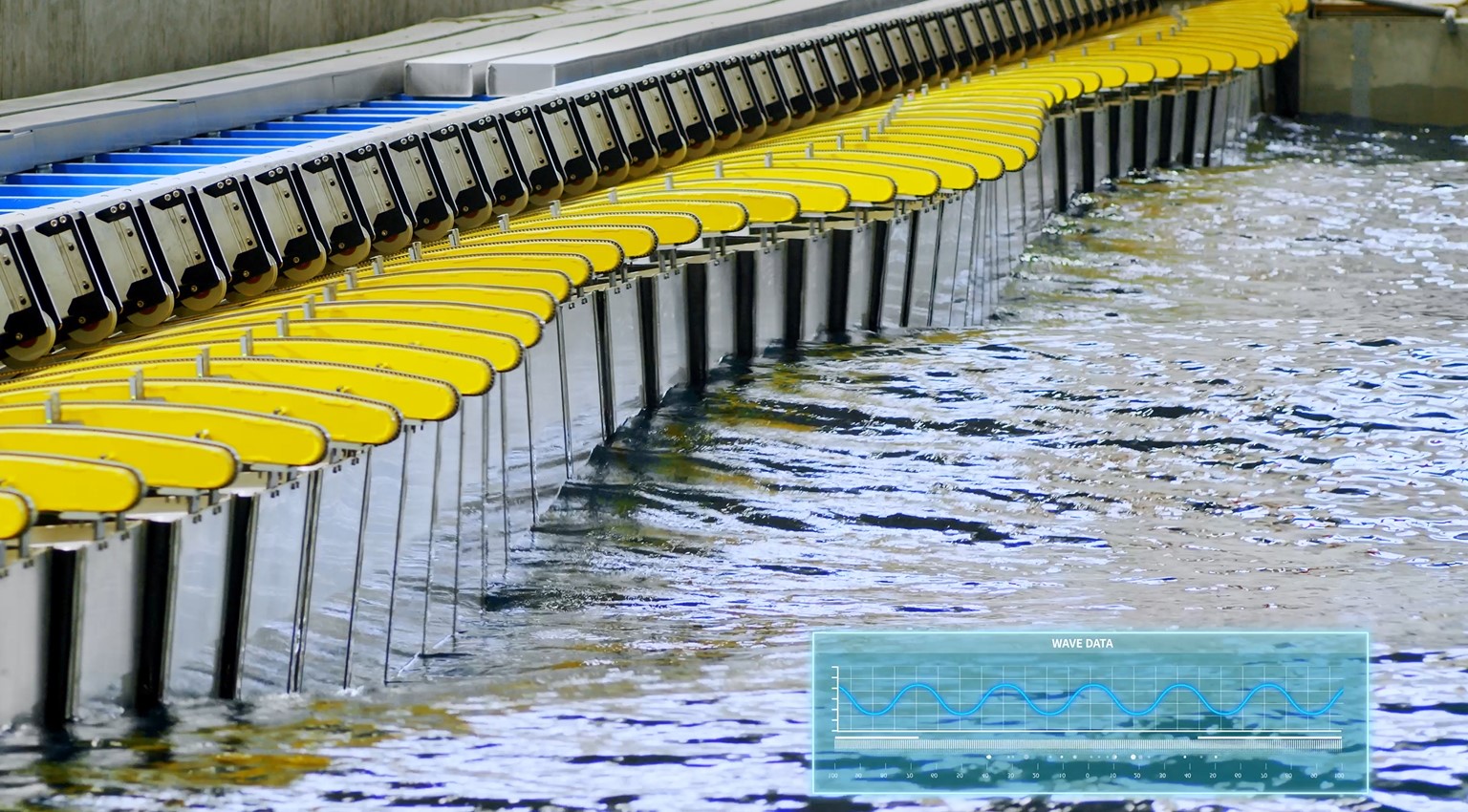
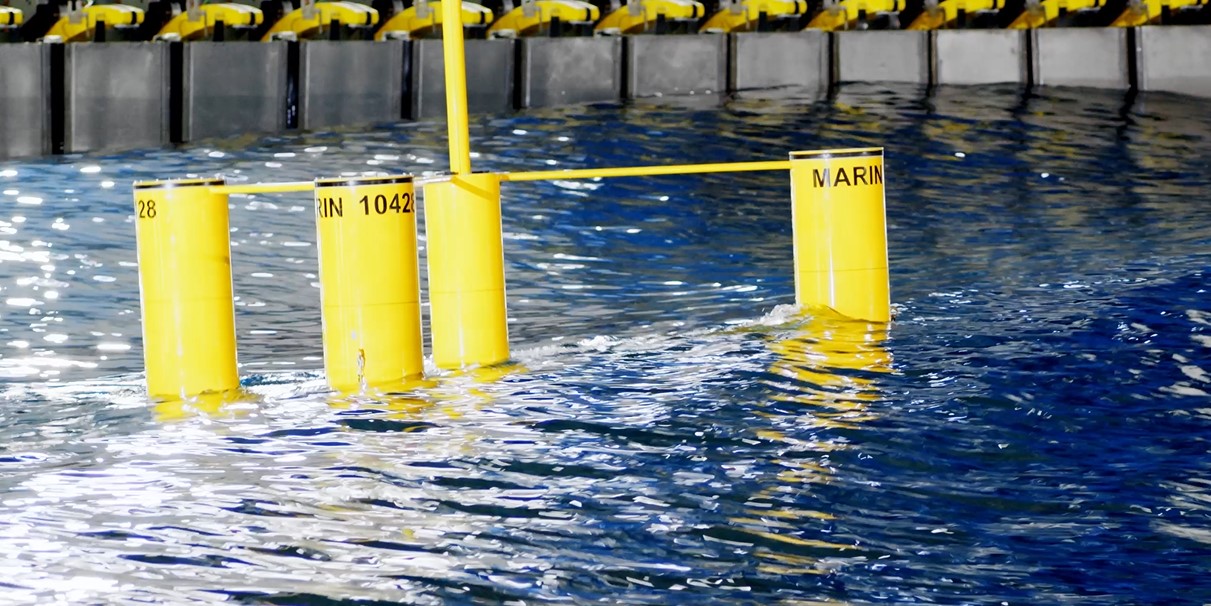
The center is equipped with a large-scale test basin measuring 36 meters in length, 30 meters in width, and 10 meters in depth, along with integrated wave, wind, and current generation systems that can realistically simulate ocean conditions. This comprehensive testing environment supports a wide range of applications, including scaled model testing, system behavior observation, and design validation analysis. Through such capabilities, OEC facilitates technological maturation, enhances engineering reliability, and assists local teams in aligning with international standards—ultimately promoting the commercialization and industrialization of innovative marine technologies.
R&D and Testing Capabilities
By combining numerical simulation analysis with hydraulic model testing, the center enables in-depth studies of how various marine structures respond to combined environmental loads—such as wind, waves, and currents. This allows for performance assessment and safety verification of offshore engineering systems, helping to enhance both the practical value and reliability of research outcomes.
Deepwater Ocean Basin factsheet
| Item | Specification Description |
| Test Basin Dimensions | 36 m (Length) × 30 m (Width) × 10 m (Depth) |
| Underwater Observation Window | Located on the south side at 4 m depth for visual monitoring of underwater tests |
| Wave Generation System | 124 serpentine-type paddles (each 0.5 m width) arranged in L-shape; regular wave height up to 0.5 m; wave direction up to 210° |
| Current Generation System | External circulation system with 6 vertical layers; each layer equipped with independent pumps for simulating ocean current profiles |
| Wind Simulation System | Simulated wind force and moment via winch-driven thrust reproduction |
| Movable Platform (Lift Floor) | Adjustable test depth from 0 to 10 m; control precision up to 1 cm |
Looking ahead, the Offshore Engineering Center will uphold its mission to drive innovation in ocean engineering and energy transition. It aims to become a vital platform for industry R&D and technology verification, both domestically and internationally, positioning Taiwan as a key hub for global maritime technology.